

Life in the Machine
One animator's view of the AI revolution
“May you live in interesting times.” - Ancient Curse
“Th-th-th-that’s all folks!” - Ancient Cartoon Curse
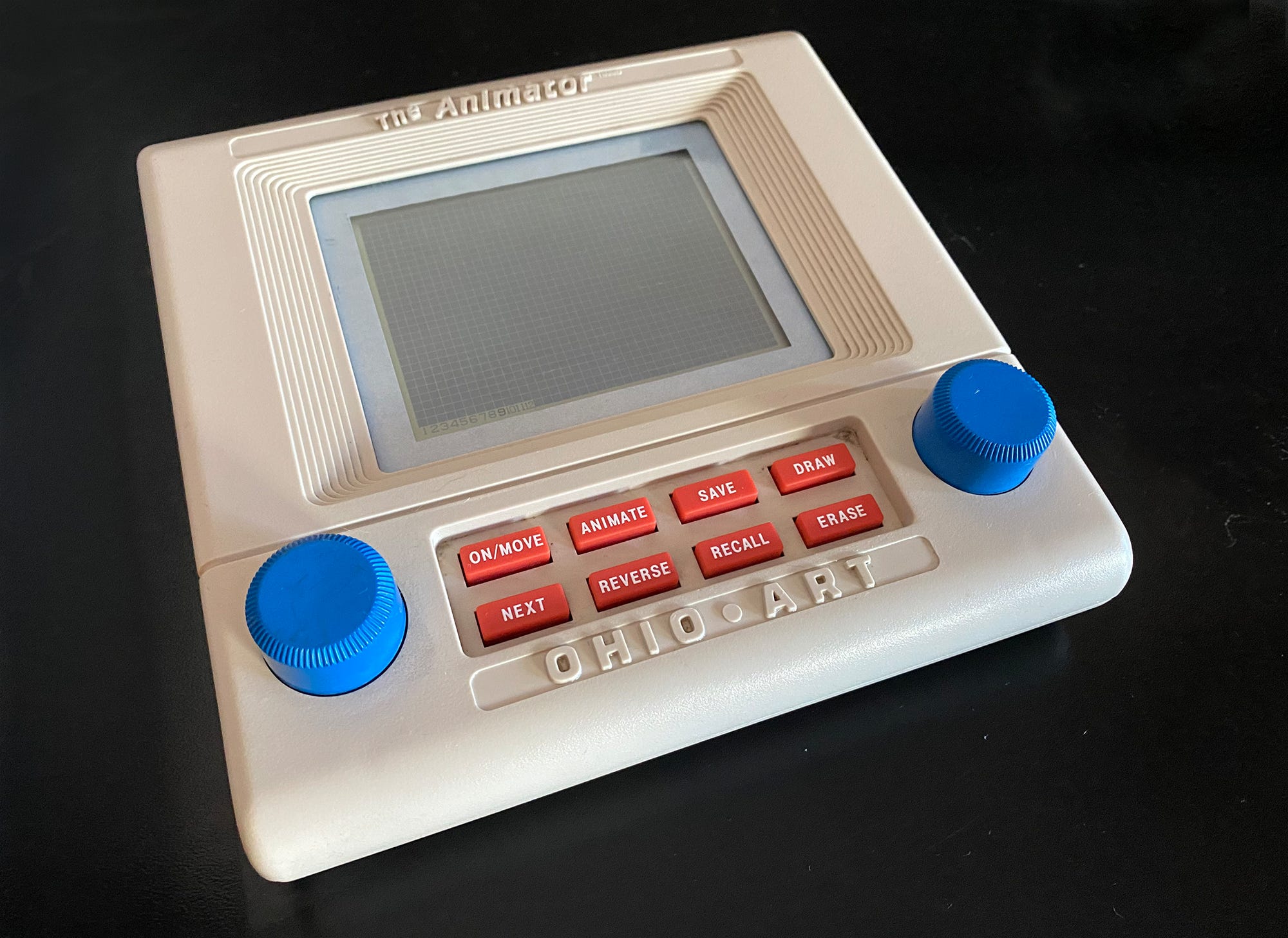
It’s a strange time to be making cartoons for a living.
I’ve been at it for more than two decades with all the ups and downs, technological changes, and non-sensical broadcaster notes those years have sent my way, but nothing has felt like this. Not quite. Sure, we’re dealing with the aftermath of the Hollywood strikes, the belt-tightening at the streamers, and the utter lack of green lights across the board. But beyond all that, what makes this time so weird is that we’re all squinting at something on the horizon that has the potential to radically change how we create animation and VFX. It might actually change how we do everything.
I’m talking, of course, about AI
Whether you see AI as a looming threat poised to remove humanity from all artistic endeavours or a democratizing force that will put a Hollywood studio in everyone’s pocket, one thing’s certain: it’s about to disrupt everything.
Technological change is nothing new in the field of animation. In fact, all visual art is only possible because of technology. Whether you look at the technological advancements in pigments that allowed for the cave paintings in Lascaux, or oil paints, or chisels, or Photoshop, visual art can only be presented in a fixed form through technology. And nowhere is that more true than in animation. Only by presenting images in rapid succession through a technological medium (Zoetrope, film projector, computer monitor) do we perceive motion and are able to laugh at that anvil dropping on that one guy’s head. Technology and technological change have always been inextricably linked to the history of animation. Hey, you got technology in my animation! You got animation in my technology!
Art & Tech
When I think about what first got me excited about the medium as a very young kid growing up in snowy Ontario Canada, it was watching the behind-the-scenes clips presented on The Wonderful World of Disney. I have such clear memories of cels featuring Donald Duck being placed under a glass placard so a single frame of film could be captured by the Oxberry camera. And from that simple act a duck with anger issues and no pants came to life on my TV. It was magic.
Life created in the machine.
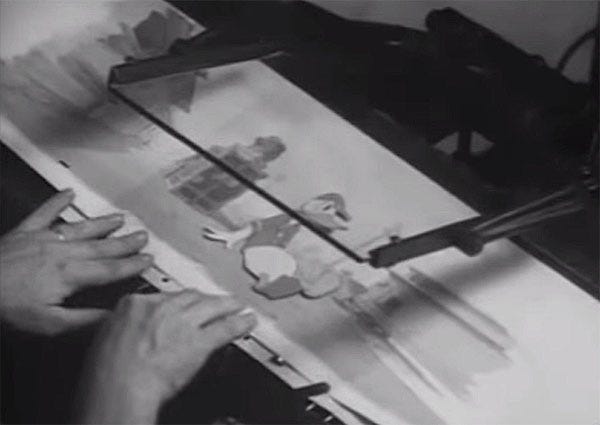
Of course, it wasn’t the machine that brought Donald Duck to life. It was Dick Lundy animating with his team of assistants, inbetweeners and clean-up artists, a whole department of talented women providing the ink and paint, and Clarence Nash quacking out the voice. Humans. Every last one of them. But put all those people on an island with no pencils, paper, microphones or cameras and we don’t get our cartoon, just a bunch of grumpy animators. So, the tech is key to this whole endeavour. Always has been.
But AI is unlike the technological changes we've seen before. These systems synthesize enormous amounts of data to perform tasks previously thought possible only by humans. At times it can feel like the tool is more in control than the artist which is a radical paradigm shift from the pencil, paint brush, chisel. And AI is progressing at a blazingly fast pace. Today, you can write a prompt into Runway AI (or Sora, Veo, Kling) and have a cartoon duck move around in a matter of minutes like this one made in Runway.
It’s an incredible feat of technology even with the changing number of fingers. But I’m going to guess when you watched that you didn’t laugh. You probably didn’t feel anything either (except maybe a healthy dose of existential dread). And that’s to say nothing of the ethics involved in the scraping and training - a topic for another day.
So, while the advent of AI has the potential to be a seismic shift in the animation industry and it may well be inevitable, it will be meaningless unless human artists are central in the creation. Legendary animators Frank Thomas and Ollie Johnston called it The Illusion of Life, but you need the life to create the illusion.
Looking to the future
So how is this all going to play out? How can we take advantage of this powerful tool without losing control of it? I have no idea. That’s why I wanted to start this newsletter - to explore the good, the bad, and the strange of AI and how it relates to my love for animation. I don’t see this space as being a cheerleader for AI, or at the vanguard of the resistance against it. I see it more as a place where I try to sort through the hype and the doom to find out what’s really happening, and discover a path through this industry at a time of enormous change.
Future dispatches will explore process and ethics and also the emotional toll this technology is having on the artists who have dedicated their life to the art of animation. AI isn’t just another tool. It touches on identity, creativity, and the meaning we find in our work. If you stick around, I hope to provide insights, news updates, commentary, and historical context, arming you with a deeper understanding of how AI could reshape animation and VFX and your place within this changing world.
If any of this interests you, I’d love to have you along for the ride. And let others know too! We’re all in this together, and no matter what kind of disruption AI brings, we'll continue doing what animation artists have always done, put the life in the machine.
Until next time,
Matt Ferg.
Looking forward to It Matt, and scouring eBay for one of those!